- Accessibility Options:
- Skip to Content
- Skip to Search
- Skip to footer
- Office of Disability Services
- Request Assistance
- 305-284-2374
- Display:
- Default
- High Contrast
- Apply
- About UM
- Give to UM
-
Schools
- School of Architecture
- College of Arts and Sciences
- Business School
- School of Communication
- School of Education and Human Development
- College of Engineering
- School of Law
- Rosenstiel School of Marine, Atmospheric, and Earth Science
- Miller School of Medicine
- Frost School of Music
- School of Nursing and Health Studies
- The Graduate School
- Division of Continuing and International Education
- Alumni



- LGBTQ+ Accelerated Call
- Resilience Challenge
- Societal Rapid Response Call
- Climate
- Health
- Society
- Predoctoral Fellowship
- Dissemination, Implementation and Commercialization
- U-LINK Courses
- U-LINK Artificial Intelligence
- U-LINK Mental Health
- U-LINK Chronic Diseases
- Asthma Under Artificially Intelligent Robot (AIR) Control: Robotic Support for Pediatric Education
- Predict Acute Exacerbation of COPD by Tracking real-time changes in physiological metrics and environmental stressors
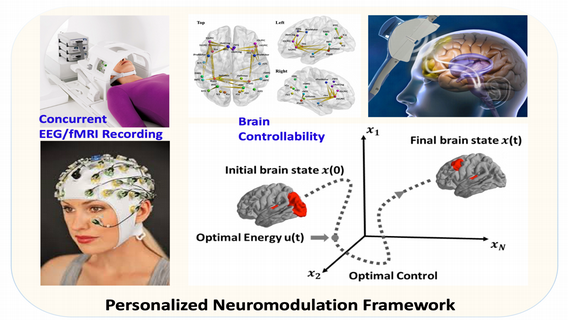
- Precision Phenotyping of Comorbid Alzheimer’s Disease and Depression for Personalized Neuromodulation Treatment
- PHASE: A CFIR-Guided, Patient-Centered PREVENT + Heart-Age Tool to Catalyze Cardiovascular Prevention Across Diverse Clinics
- Optimization of MMP-13 Inhibitor Selectivity to Prevent and Reverse Chemotherapy-Induced Peripheral Neuropathy
- Feasibility and Acceptability of an AI Therapist Twin Delivering Familias Unidas, an Evidence-based Drug Abuse and Mental Health Intervention for Hispanic Youth
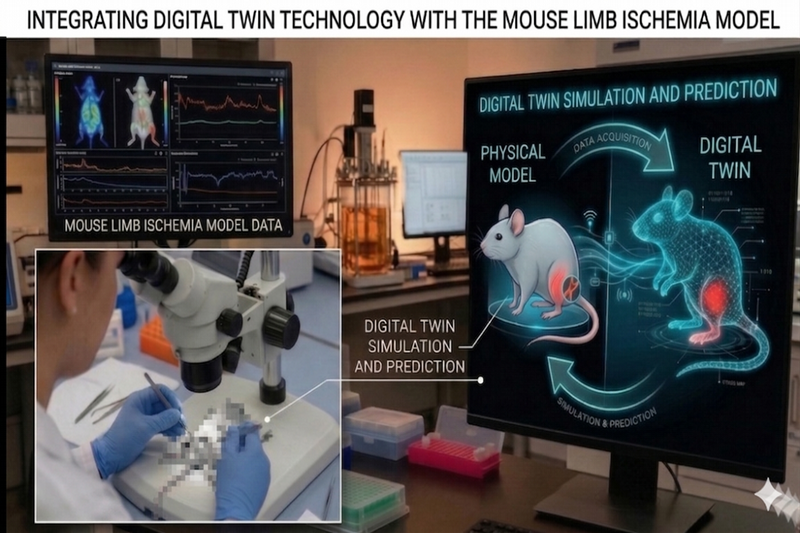
- Integrating Digital Twin Technology with the Mouse Limb Ischemia Model
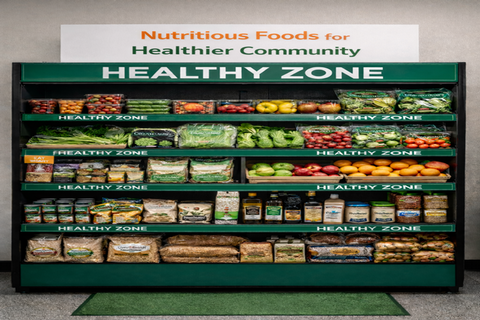
- Leveraging Independent Grocers as Community Health Hubs: A Transdisciplinary Approach to Address Obesity in Miami-Dade’s Underserved Areas
- Toward Digital Twin-Assisted Muscle-Network Trainer for Rehabilitation Process of Stroke-Induced Motor Impairments
- Discovery and Validation of Chaos Driven Physiological Sleep-PTSD Biomarkers
- LGBTQ+ Accelerated Call
- Resilience Challenge
- Societal Rapid Response Call
- Climate
- Health
- Society
- Predoctoral Fellowship
- Dissemination, Implementation and Commercialization
- U-LINK Courses
- U-LINK Artificial Intelligence
- U-LINK Mental Health
- U-LINK Chronic Diseases
- Asthma Under Artificially Intelligent Robot (AIR) Control: Robotic Support for Pediatric Education
- Predict Acute Exacerbation of COPD by Tracking real-time changes in physiological metrics and environmental stressors
- Precision Phenotyping of Comorbid Alzheimer’s Disease and Depression for Personalized Neuromodulation Treatment
- PHASE: A CFIR-Guided, Patient-Centered PREVENT + Heart-Age Tool to Catalyze Cardiovascular Prevention Across Diverse Clinics
- Optimization of MMP-13 Inhibitor Selectivity to Prevent and Reverse Chemotherapy-Induced Peripheral Neuropathy
- Feasibility and Acceptability of an AI Therapist Twin Delivering Familias Unidas, an Evidence-based Drug Abuse and Mental Health Intervention for Hispanic Youth
- Integrating Digital Twin Technology with the Mouse Limb Ischemia Model
- Leveraging Independent Grocers as Community Health Hubs: A Transdisciplinary Approach to Address Obesity in Miami-Dade’s Underserved Areas
- Toward Digital Twin-Assisted Muscle-Network Trainer for Rehabilitation Process of Stroke-Induced Motor Impairments
- Discovery and Validation of Chaos Driven Physiological Sleep-PTSD Biomarkers