Summary
|
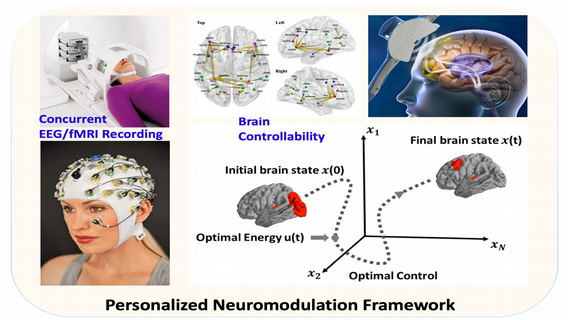
Alzheimer's Disease (AD), a progressive form of dementia characterized by cognitive and memory deficits, is projected to grow from a market value of $5.08 billion in 2022 to $6.94 billion in 2026. Depression is a common, comorbid neuropsychiatric condition in AD and Mild Cognitive Impairment (MCI), affecting 30- 50% of patients. Diagnosing and treating depression in the context of AD and MCI presents significant clinical challenges. First, overlapping symptoms of depression and AD/MCI complicate the differentiation of depression from AD/MCI, and Depressive symptoms can accelerate cognitive decline in MCI/AD patients. Second, treatment becomes notably more complex and challenging when depression coexists with cognitive impairment. Repetitive transcranial magnetic stimulation (rTMS) is the most recognized neuromodulation technique approved by the FDA for the treatment of depression, However meta-analyses of randomized controlled trials using rTMS report response rates around 29-54% and remission rates up to 19%. The modest remission rate and variable treatment response highlight the pronounced heterogeneity of depression in the context of AD and underscore the urgent need for personalized therapeutic strategies. We have developed a novel brain controllability analysis (BCA) method that quantitatively identifies depressive symptoms in MCI patients and enables personalized target mapping and parameter optimization for precision neuromodulation. However, it remains unknown whether BCA can distinguish AD patients with comorbid depression from those without, or whether their optimal neuromodulation targets and parameters differ. This proposal aims to address depressive symptoms in AD by applying our advanced BCA and personalized neuromodulation approaches.
|
Team
|
Yingchun Zhang (Biomedical Engineering), James Galvin (Cognitive Disorder), Daniel Jimenez (Psychiatry), Pradip Pattany (Diagnostic Radiology)
|