Summary
|
Asthma is a chronic lung disease affecting one in twelve school-aged children in the
United States. Asthma leads to significant health and socioeconomic burdens,
including 13.8 million missed school days annually and reduced quality of life for
family caregivers. Caregivers often lack essential knowledge about asthma
management, which correlates with poorer child health outcomes. Despite the
critical role of discharge education in preventing hospital readmissions, systemic
barriers such as time constraints, miscommunication, language barriers, and
staffing shortages hinder effective education. Research shows that 50-80% of
asthma patients misuse inhalers, and many caregivers lack basic understanding of
medications. Innovative educational strategies are needed to address these gaps.
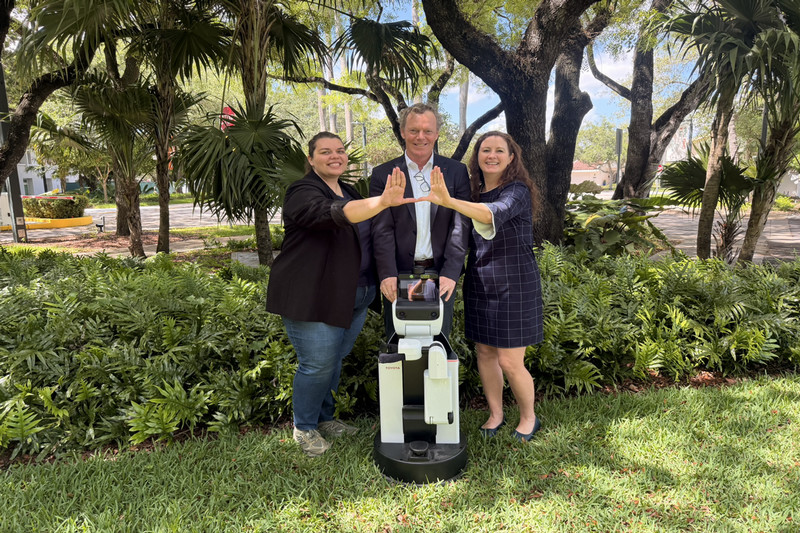
Robotic companions have shown promise in supporting pediatric asthma management by teaching inhaler techniques and promoting adherence. The goals of this project are to (1) implement and evaluate a novel Artificially Intelligent Robot (AIR) Control educational intervention with pediatric asthma patients and caregivers in an inpatient setting, and (2) provide pilot data to support a future grant application to the National Institutes of Health (NIH). The purpose of the study is to compare the impact of standard asthma education with the standard + AIR Control intervention on child outcomes, family caregiver outcomes, and healthcare utilization.
|
Team
|
Cynthia Foronda (Nursing and Health Studies), Ubbo Visser (Computer Science), Monica Cardenas (Pediatrics), Kasia Pasternak (Computer Science), Karina Gattamorta (Nursing and Health Studies), Bridgette Johnson (Nursing, Jackson Health System)
|